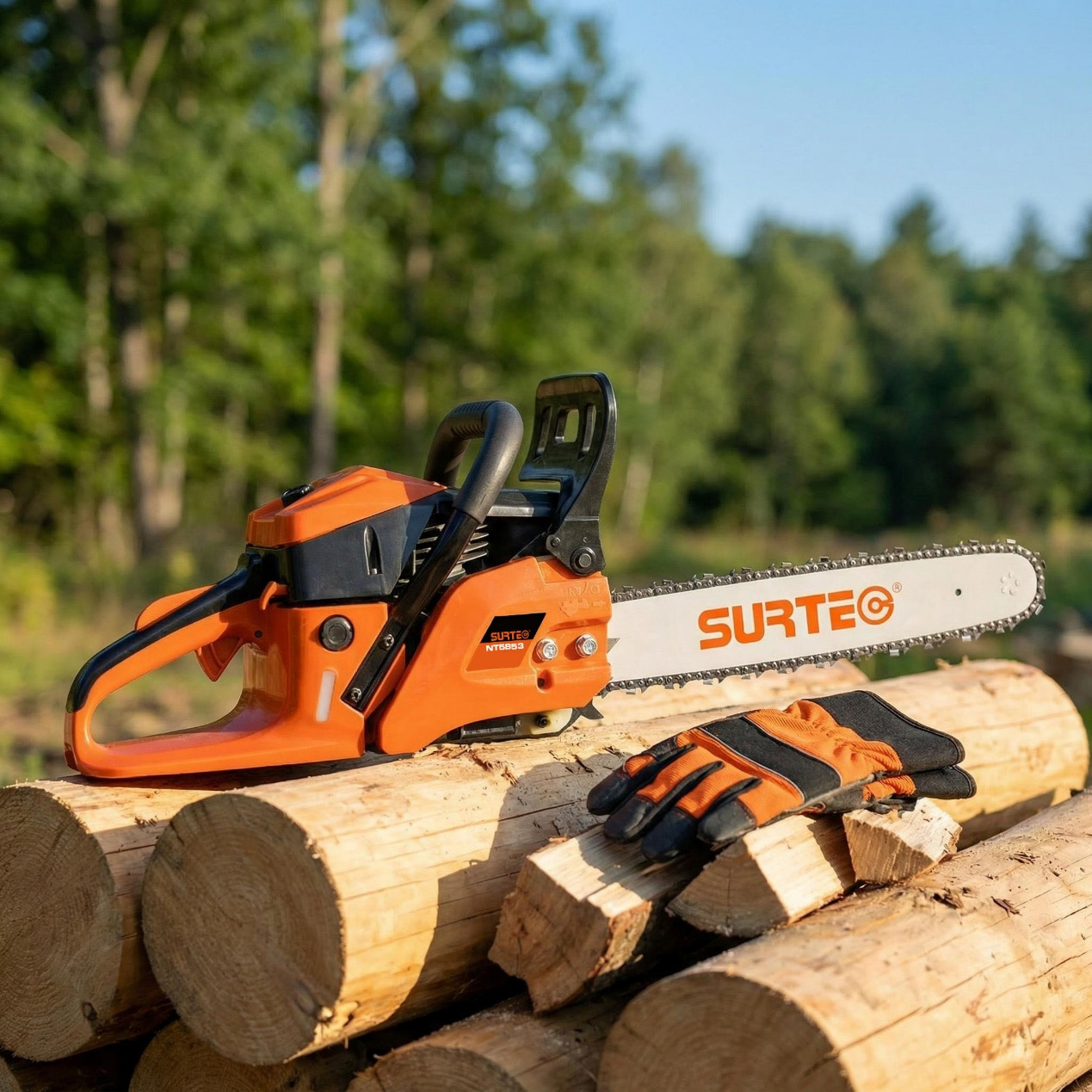
After shutdown, disconnect the spark plug cap. Thoroughly clean the whole unit — use a brush and rag to remove sawdust, wood chips and resin from the guide bar, bar pad, sprocket cover and cooling fins. Trapped debris holds heat, causing overheating and premature wear. Then check for loose screws, nuts or visible damage.
2. Chain Inspection & Tensioning
The saw chain stretches and loosens as it heats up, so check tension frequently and always adjust a cold chain. A properly tensioned chain snaps back into the guide bar groove when pulled by hand, stays tight enough that the tie straps never lift out of the groove, yet is loose enough to be pulled around the bar. On a popular 20-inch chainsaw for serious wood cutting, this habit also protects the sprocket and bar rails, so the whole cutting system lasts longer.
3. Air Filter Preliminary Check
Quickly inspect the air filter. If it is lightly dusty, tap it gently on a hard surface to dislodge the debris. A clogged filter restricts airflow, enriches the fuel mixture, reduces power, increases fuel consumption and fouls the spark plug.

1. Air Filter Service
This step is critical. Remove the filter and clean it by type. A paper filter should be blown clean from the inside out with low-pressure compressed air — never washed with solvent or gasoline. A fleece or foam filter can be washed in warm, soapy water, rinsed and air-dried completely before refitting; some foam filters take a light coat of chain oil to improve dust adhesion.
2. Bar & Chain Lubrication System
Fill the oil tank with a high-quality, specialized bar and chain oil — its tacky, adhesive properties outperform motor oil under extreme pressure. Verify oiler output by running the saw at high speed near a light surface; a fine line of oil should appear. Inspect the guide bar for uneven rail wear, flip it regularly for even longevity and dress burrs out of the groove with a file.
3. Sharpening the Saw Chain
A sharp chain is a safe chain. Dull cutters require excessive force, increase kickback risk and strain the engine. Use a correctly sized round file with a filing guide to hold the cutting angle — typically 30° or 35° — keeping every cutter the same length and angle. Then lightly file down the depth gauges (rakers) with a flat file to maintain the correct height difference, which controls chip size.
4. Spark Plug & Fuel System
Remove and inspect the spark plug: clean the electrodes with a wire brush, set the gap to the manufacturer's specification (typically 0.5–0.65 mm) and replace the plug if electrodes are eroded or cracked. Always use fresh, high-octane gasoline mixed with premium ISO-L-EGD or JASO FD-rated two-stroke oil at the specified ratio — at least 25:1 on many surtec engines. Stale fuel is a primary cause of carburetor issues.

For storage exceeding one month, drain the fuel tank and carburetor completely, then run the engine until it stops to purge the system. Remove the spark plug, pour 5–10 ml of two-stroke oil into the cylinder and pull the starter cord slowly several times to coat the piston and cylinder walls before refitting the plug. Remove the chain and bar, coat them in oil, and store the whole unit in a dry, protected place. The same logic applies to every surtec machine — whether your tree trimming saw is cordless from our lithium range or a gasoline powered engine.
Maintenance Is an Investment in Safety and Longevity
Adhering to this disciplined regimen ensures optimal cutting performance, maximizes the life of your investment and, above all, safeguards the operator. surtec engineers a full family of outdoor power equipment — from compact garden saws to commercial logging chainsaws for professional timber work — backed by genuine spares, online tutorials and expert troubleshooting. We also welcome dealers across Latin America, Africa, Eastern Europe and Southeast Asia who want to offer dependable two-stroke and four-stroke power that lasts.
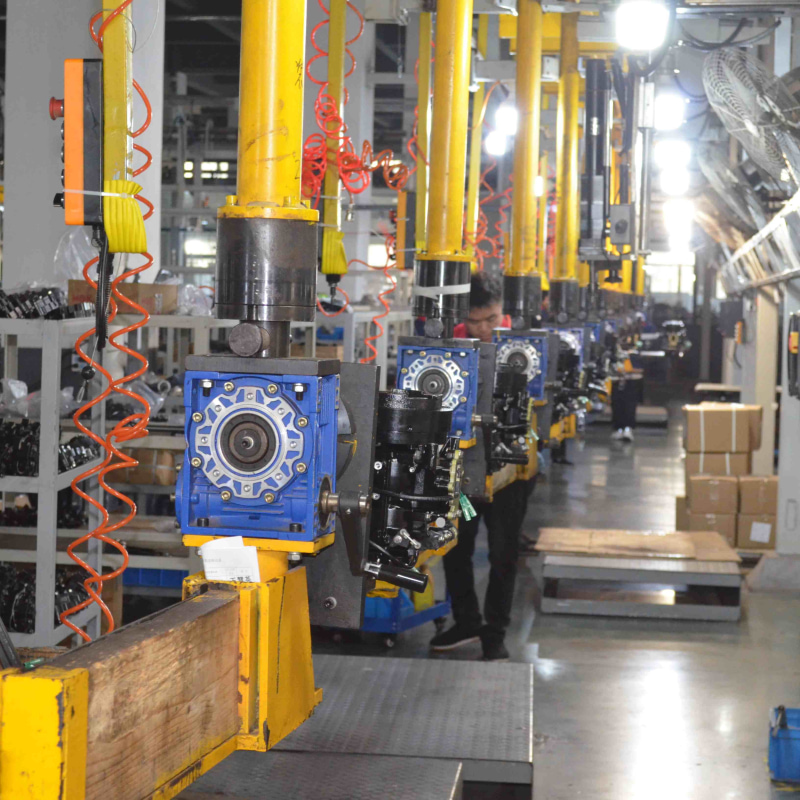
On the water, an outboard motor has no easy days. Salt spray, tropical sun and long hours under full throttle test every component at once. In the demanding world of marine propulsion, not all outboard motors are created equal — and at surtec,...
Proper chainsaw maintenance is non-negotiable — for safety, for cutting performance and for the working life of the tool. A well-maintained saw is a predictable, efficient partner; a neglected one is a significant hazard. That is doubly true...
Trusted by 100+ Distributors, SURTEC Power Your Market Growth with Profitable Solutions
 20 Years Of Experience
 TOP 5 Supplier Of Gardening Machine In China
 10,000 Of Factory Space
 EN